
Sectors
“When one tugs at a single thing in nature, he finds it attached to the rest of the world.”
John Muir
Ecology
Director, Russell Taylor
Russell Taylor and his team bring more than twenty-five years of experience helping communities develop safe and abundant food systems. His work spans practical agronomy, sustainable land management, and policy reform.
The ecology team he leads at Making Peace Profitable™ is guided by a simple but powerful principle: when people have reliable access to food, one of humanity’s most fundamental needs is secured. With that foundation in place, communities are far more likely to invest their energy in growth, innovation, and cooperation rather than in competition and conflict.
Food as a Cornerstone of Peace and Stability
Throughout history, food has been both a lifeline and a means of exerting power. Scarcity breeds instability; abundance creates opportunity. Ensuring that communities can consistently produce safe, nutritious food removes one of the most common triggers of social unrest and economic vulnerability.
Access to food is not simply a matter of nourishment—it is the gateway to human potential. When basic needs are met, people are free to focus on education, enterprise, and long-term development rather than survival.
Communities that can sustainably feed themselves are far less likely to be drawn into conflict to secure resources. Equitable food access shifts power dynamics toward collaboration, trade, and shared prosperity.
Making Peace Profitable™ recognizes food as one of the most decisive levers for creating durable peace and economic resilience.
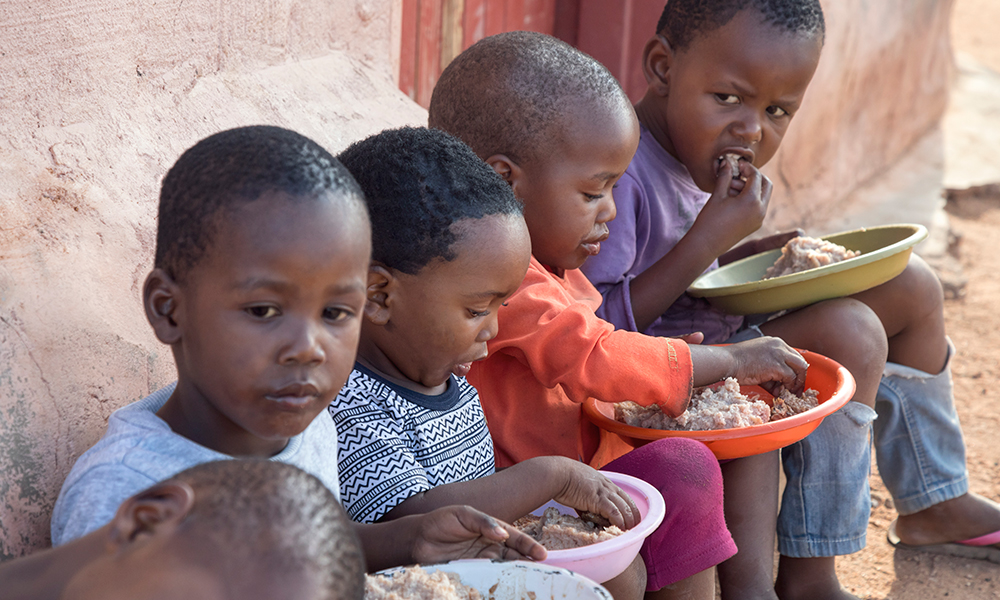
Food as a Cornerstone of Peace and Stability
Throughout history, food has been both a lifeline and a means of exerting power. Scarcity breeds instability; abundance creates opportunity. Ensuring that communities can consistently produce safe, nutritious food removes one of the most common triggers of social unrest and economic vulnerability.
Access to food is not simply a matter of nourishment—it is the gateway to human potential. When basic needs are met, people are free to focus on education, enterprise, and long-term development rather than survival.
Communities that can sustainably feed themselves are far less likely to be drawn into conflict to secure resources. Equitable food access shifts power dynamics toward collaboration, trade, and shared prosperity.
Making Peace Profitable™ recognizes food as one of the most decisive levers for creating durable peace and economic resilience.
Removing Barriers to Sustainable Agricultural Growth
Truly equitable and consistent food access requires more than technical knowledge. It also depends on fair enabling systems. In many regions, restrictive or outdated legal and regulatory frameworks prevent farmers from adopting modern, safe, and productive methods.
The Making Peace Profitable™ ecology team is working to remove these barriers. With improved soil health, water management, and crop productivity, both farmers and local economies are empowered.
It’s an approach that fosters resilience and self-reliance, builds economic opportunity, and mitigates external pressures—creating the conditions for long-term stability.
From Food Security to Lasting Peace
At its core, then, Making Peace Profitable™ addresses one of the most fundamental drivers of conflict: the struggle to feed people. By helping communities grow safe, abundant crops, we replace scarcity with opportunity and competition with cooperation.
Our ecology team stands ready and motivated to share decades of agronomic expertise with partners around the world—governments, NGOs, investors, and local leaders—to build food systems that are productive, sustainable, and inclusive.
When people can feed themselves with dignity and consistency, the foundations of peace become stronger than the forces of conflict. Prosperity grows not from confrontation, but from collaboration.
“Equitable and consistent food access shifts power dynamics toward cooperation.”
Russell Taylor