Sectors
“A resilient economy is one that invests in its people, bridges inequality, and opens doors for all.”
Ngozi Okonjo-Iweala
Finance
Director, Bruce Wiseman
Bruce Wiseman brings decades of expertise in market research and strategic insight to Making Peace Profitable™. He publishes Strategic Financial Intelligence, a widely heralded financial newsletter covering precious metals and digital currencies. He is also President & CEO of On Target Research, which has offices in Toronto, Moscow, Sydney, and Dublin and advises governments, advertising agencies, and corporate clients worldwide.
At Making Peace Profitable™, Bruce focuses on building societal momentum around a proven principle: peace endures not when merely declared, but when reinforced by shared economic interest.
Aligning Financial Incentives with Stability
Peace is often framed as a moral aspiration—a noble goal pursued for ethical or humanitarian reasons. While compelling, these arguments are incomplete. The most durable case for peace is economic: when peace is profitable, it is sustainable. Aligning financial incentives with stability transforms peace from an ideal into a rational, self-reinforcing outcome.
Conflict is costly. Wars destroy infrastructure, disrupt trade, drain public budgets, and divert talent from productive endeavors into survival and destruction. Even nations that “win” wars often emerge economically weakened, burdened by debt, reconstruction costs, and long-term social trauma. By contrast, peace enables commerce, investment, innovation, and human capital development.
When societies recognize that cooperation yields higher returns than conflict, peace stops being fragile and becomes logical—and inevitable.
Aligning Financial Incentives with Stability
Peace is often framed as a moral aspiration—a noble goal pursued for ethical or humanitarian reasons. While compelling, these arguments are incomplete. The most durable case for peace is economic: when peace is profitable, it is sustainable. Aligning financial incentives with stability transforms peace from an ideal into a rational, self-reinforcing outcome.
Conflict is costly. Wars destroy infrastructure, disrupt trade, drain public budgets, and divert talent from productive endeavors into survival and destruction. Even nations that “win” wars often emerge economically weakened, burdened by debt, reconstruction costs, and long-term social trauma. By contrast, peace enables commerce, investment, innovation, and human capital development.
When societies recognize that cooperation yields higher returns than conflict, peace stops being fragile and becomes logical—and inevitable.
From Local Communities to Global Geopolitics
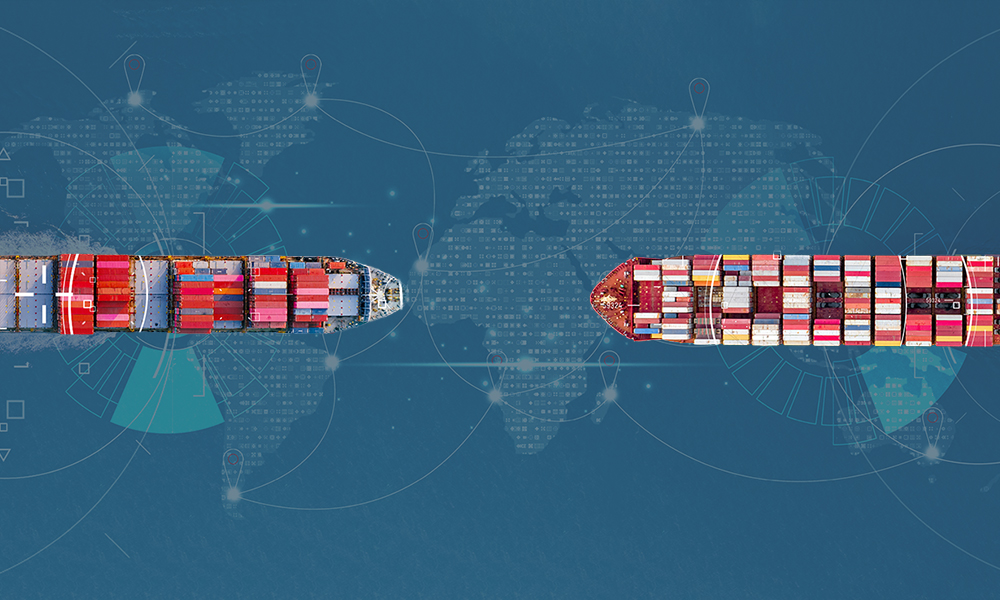
Making peace profitable means creating systems where economic gains depend on stability rather than violence. Trade agreements, shared infrastructure projects, cross-border supply chains, and regional energy or water partnerships all raise the cost of conflict. When former rivals profit together—through manufacturing, tourism, agriculture, or technology—the incentive to maintain peace becomes embedded in everyday economic life. War doesn’t only cause suffering; it destroys livelihoods.
This principle applies at every level, from local communities to global geopolitics. In post-conflict regions, jobs and entrepreneurship reduce the appeal of extremism more effectively than force alone. Young people with economic opportunity are far less likely to turn to violence. On a national scale, countries integrated into global markets have far more to lose from instability and far more to gain from cooperation. Markets reward predictability, contracts, and trust—all natural byproducts of peace.
Peace as High-Performing Long-Term Capital
Governments that spend less on war and internal security can redirect resources toward education, healthcare, infrastructure, and research—investments that compound over generations. Peace functions like long-term capital: its returns grow over time, while the costs of conflict increase exponentially.
Critically, Making Peace Profitable™ does not ignore justice or accountability. It recognizes that moral outcomes endure when reinforced by economic incentives. History shows that treaties alone are fragile, but treaties backed by shared economic interest last.
In short, peace succeeds when it pays. When stability generates wealth and cooperation outperforms conflict, peace stops being a temporary ceasefire and becomes the most rational business decision societies can make.
“When societies recognize that cooperation yields higher returns than conflict, peace stops being fragile and becomes logical.”
Bruce Wiseman